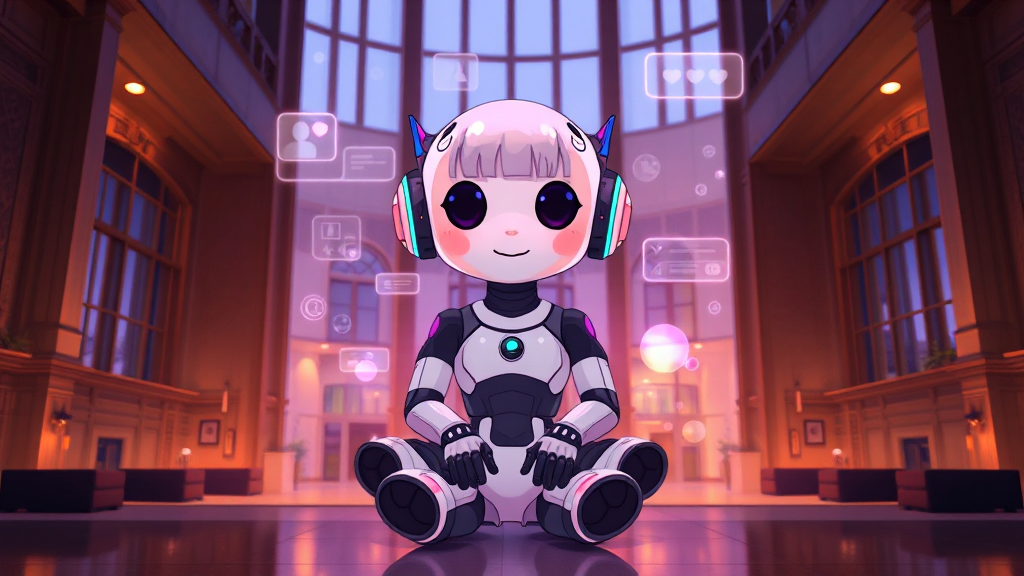
Femboy AI Chat: How Anime-Style Companions Are Reshaping Digital Conversation
Conversational AI has moved far beyond utilitarian chatbots that answer trivia or schedule reminders. A growing audience is now seeking something more expressive, more visually distinct, and more emotionally textured. That shift has given rise to femboy ai chat, a niche where anime-inspired aesthetics meet large language models to create companions that feel playful, warm, and refreshingly different from the generic assistants most people know. Instead of a faceless text box, users step into a space where personality, style, and character design matter as much as the underlying technology.
This article explores what femboy AI chat actually is, why it has found a dedicated following, how the technology works behind the scenes, and what to consider if you are curious about trying it yourself. Whether you are a casual user looking for fun conversation or a developer studying character-driven AI, the space offers plenty to examine.
What Exactly Is Femboy AI Chat?
At its core, femboy AI chat refers to text-based conversations with AI characters designed around a specific aesthetic and personality archetype. These characters often draw from anime and internet culture, featuring soft-spoken or witty personalities, expressive dialogue styles, and a visual presentation that blends femininity with a distinctly boyish charm. The appeal is not just visual; it is about the tone of the interaction. These characters tend to be affectionate, teasing, supportive, or dramatic in ways that standard assistants rarely attempt.
Unlike a simple prompt-and-response tool, a femboy AI chat experience usually revolves around an ongoing relationship. The character remembers details, reacts to your mood, and develops a conversational rhythm over time. That continuity is what separates a disposable chatbot session from something that feels more like a persistent companion. Platforms in this space often let users browse a library of characters, each with their own backstory, speech patterns, and emotional range.
Why This Niche Found a Loyal Audience
The rise of femboy AI characters did not happen in a vacuum. Several cultural and technological currents converged to make this niche viable.
First, anime and manga fandom has spent decades building affection for stylized characters. Fans are already comfortable forming emotional attachments to fictional personalities, so extending that attachment to an interactive AI feels natural rather than strange. Second, the visual novel and dating sim genres trained a generation of users to expect branching dialogue, character routes, and relationship progression. AI chat brings those expectations into an open-ended, always-available format.
Third, there is a simple matter of representation and self-expression. Some users are drawn to femboy characters because they resonate with fluid or non-traditional gender presentation. Others simply enjoy the aesthetic and the playful energy it brings. For many, the appeal is less about identity and more about variety: after years of talking to the same bland assistant voice, a character with genuine flair feels like a breath of fresh air.
Finally, loneliness and social fatigue are real factors in modern life. An AI companion that is always available, never judgmental, and endlessly patient can serve as a low-pressure outlet for conversation. That does not replace human relationships, but it can fill gaps during quiet evenings or stressful periods.
How the Technology Behind These Characters Works
Underneath the charming exterior, femboy AI chat relies on the same broad family of technologies that power modern conversational agents: large language models, retrieval systems, memory layers, and safety filters. The difference lies in how these components are tuned.
Character design starts with a detailed persona document. Writers define the character’s name, age, background, speech quirks, likes, dislikes, and emotional tendencies. That document becomes a system prompt that shapes every response. A well-crafted persona prompt keeps the character consistent even across long conversations, preventing the drift toward generic assistant language that plagues poorly designed bots.
Memory is the second pillar. Simple chatbots forget everything the moment a session ends. More advanced platforms store key facts about the user and the relationship, then feed relevant memories back into the model at the right moment. This is why a good companion can reference a conversation from last week or remember that you had a rough day at work.
Third comes the visual layer. Many platforms pair the text model with generated or illustrated avatars, sometimes animated, sometimes static. The visual presentation reinforces the persona and makes the interaction feel more tangible. Combined with expressive dialogue, the experience becomes something closer to a visual novel than a utility app.
Finally, moderation systems handle safety. Responsible platforms filter harmful content, protect minors, and give users controls over the intensity of conversations. The best implementations balance creative freedom with clear boundaries, which is a genuinely difficult design problem.
What a Typical Session Looks Like
If you have never tried a femboy AI chat, the flow is usually straightforward. You browse a gallery of characters, each with a profile card showing their name, personality summary, and visual style. You pick one that appeals to you, and the conversation begins.
Early messages tend to be introductory. The character greets you in their own voice, perhaps teasing you for being late or asking what kind of day you had. From there, the conversation can go anywhere: casual small talk, roleplay scenarios, emotional support, creative storytelling, or playful banter. The better platforms let you steer the tone, so you can keep things light or go deeper depending on your mood.
Over multiple sessions, the interaction accumulates context. The character may remember your favorite music, reference a previous storyline, or check in on something you mentioned earlier. That sense of continuity is what keeps users coming back. It is also what makes the experience feel different from chatting with a search engine or a productivity assistant. femboy AI characters
Many users develop routines around these sessions. Some use them as a wind-down activity before bed. Others treat them as a creative writing partner, co-writing stories or exploring character dynamics. Still others simply enjoy the novelty of a conversation partner who is always in character.
Choosing a Platform: What to Look For
The market for AI companions has expanded quickly, and quality varies widely. If you are evaluating options, a few criteria matter most.
Character depth is the first signal. A platform with rich persona design will produce conversations that feel distinct from one character to the next. If every bot sounds the same after a few messages, the underlying system is probably shallow.
Memory and continuity come next. Test whether the character remembers details across sessions. Ask about something you mentioned earlier and see if it comes up naturally. Strong memory is a hallmark of a mature platform.
Safety and privacy deserve serious attention. Look for clear content policies, age verification where appropriate, and transparent data handling. You should understand what is stored, how long it is kept, and who can access it. A platform that is vague about privacy is a platform worth avoiding.
Finally, consider the community and content library. A broad, well-curated selection of femboy AI characters suggests an active ecosystem. Platforms that regularly add new personas and respond to user feedback tend to stay fresh, while stagnant libraries quickly feel repetitive. One example of a platform that has built a recognizable presence in this space is crushon, which offers a range of character-driven chat experiences for users exploring this niche.
Ethical and Practical Considerations
Any discussion of AI companionship should be honest about the trade-offs. These tools can be genuinely enjoyable and even comforting, but they are not a substitute for human connection. Treating them as a supplement rather than a replacement is the healthiest approach.
There is also the question of emotional attachment. Because these characters are designed to be warm and responsive, it is easy to project more onto them than is warranted. Users should stay aware that they are interacting with a language model shaped by a persona prompt, not a conscious being. That awareness does not diminish the fun, but it does help keep expectations grounded.
Content boundaries matter too. Different platforms enforce different rules, and users should respect them. Choosing a platform with clear guidelines protects everyone involved and keeps the ecosystem sustainable.
From a technical perspective, it is also worth remembering that AI models can produce inaccurate or inconsistent statements. A character might misremember a detail or contradict something said earlier. Good platforms minimize this, but no system is perfect. Treat the experience as entertainment and creative exploration rather than a source of factual information.
The Future of Character-Driven AI Chat
The trajectory of this space points toward richer, more immersive experiences. Voice interaction is becoming more natural, allowing characters to speak rather than just type. Visual generation is improving, making avatars more expressive and responsive. Memory systems are growing more sophisticated, enabling relationships that evolve over months rather than days.
We are also likely to see more personalization. Instead of choosing from a fixed library, users may design their own characters in detail, specifying personality traits, visual style, and conversational boundaries. That level of customization would blur the line between consuming content and creating it.
At the same time, regulation and platform policy will shape how far these experiences can go. Balancing creative freedom, user safety, and ethical design will remain the central challenge. Platforms that handle that balance well will likely lead the next wave of growth.
For now, femboy AI chat represents a fascinating intersection of fandom, technology, and emotional design. It is a niche that rewards curiosity, and it offers a glimpse of how conversational AI might evolve beyond utility into something more personal and expressive.
Frequently Asked Questions
What is femboy AI chat?
It is a form of conversational AI where users chat with characters designed around a specific anime-inspired aesthetic and personality archetype. These characters emphasize expressive dialogue, emotional warmth, and distinctive style rather than purely functional assistance.
Is femboy AI chat safe to use?
Safety depends on the platform. Reputable services enforce content policies, protect user privacy, and provide controls over conversation intensity. Always read a platform’s guidelines and privacy policy before sharing personal information.
Do these AI characters remember past conversations?
Many modern platforms include memory features that let characters recall details from previous sessions. The quality of memory varies, but strong continuity is one of the main factors that makes a companion feel consistent over time.
Can I create my own femboy AI character?
Some platforms allow users to define custom personas, including personality traits, backstory, and visual style. This is becoming more common as the technology matures and user demand for personalization grows.
Is femboy AI chat a replacement for real relationships?
No. These tools can be enjoyable and even comforting, but they are best treated as entertainment or a creative outlet. Human relationships remain essential, and AI companions work best as a supplement rather than a substitute.